
0
Loading
Vehicles
-
 $46,181 PENZ Price$46,370$3,039 Total SavingsDetailed PricingMSRP:$48,870PENZ Savings:- $3,039Subtotal:$45,831Dealer Fees:+ $350PENZ Price:$46,181More
 -
 $57,000 PENZ Price$12,089 Total SavingsDetailed PricingMSRP:$68,739PENZ Savings:- $6,089Subtotal:$62,650$6,000Dealer Fees:+ $350PENZ Price:$57,000More
 -
 $56,619 PENZ Price$57,295$3,526 Total SavingsDetailed PricingMSRP:$59,795PENZ Savings:- $3,526Subtotal:$56,269Dealer Fees:+ $350PENZ Price:$56,619More
 -
-
 $53,623 PENZ Price$54,375$3,602 Total SavingsDetailed PricingMSRP:$56,875PENZ Savings:- $3,602Subtotal:$53,273Dealer Fees:+ $350PENZ Price:$53,623More
 -
 $53,447 PENZ Price$5,478 Total SavingsDetailed PricingMSRP:$58,575PENZ Savings:- $5,478Subtotal:$53,097Dealer Fees:+ $350PENZ Price:$53,447More
 -
 $50,500 PENZ Price$57,129$12,349 Total SavingsDetailed PricingMSRP:$62,499PENZ Savings:- $6,349Subtotal:$56,150$6,000Dealer Fees:+ $350PENZ Price:$50,500More
 -
 $46,500 PENZ Price$48,893$6,784 Total SavingsDetailed PricingMSRP:$52,934PENZ Savings:- $4,784Subtotal:$48,150$2,000Dealer Fees:+ $350PENZ Price:$46,500More
 -
 $53,500 PENZ Price$59,833$12,534 Total SavingsDetailed PricingMSRP:$65,684PENZ Savings:- $6,534Subtotal:$59,150$6,000Dealer Fees:+ $350PENZ Price:$53,500More
 -
 $55,250 PENZ Price$59,532$11,579 Total SavingsDetailed PricingMSRP:$66,479PENZ Savings:- $7,329Subtotal:$59,150$4,250Dealer Fees:+ $350PENZ Price:$55,250More
 -
 $77,350 PENZ Price$10,575 Total SavingsDetailed PricingMSRP:$87,575PENZ Savings:- $9,575Subtotal:$78,000Chevrolet Consumer Cash Program- $1,000Dealer Fees:+ $350PENZ Price:$77,350More
 -
-
 $79,350 PENZ Price$11,565 Total SavingsDetailed PricingMSRP:$90,565PENZ Savings:- $10,565Subtotal:$80,000Chevrolet Consumer Cash Program- $1,000Dealer Fees:+ $350PENZ Price:$79,350More
 -
$79,850 PENZ Price$84,772$10,509 Total SavingsDetailed PricingMSRP:$90,009PENZ Savings:- $9,509Subtotal:$80,500Chevrolet Consumer Cash Program- $1,000Dealer Fees:+ $350PENZ Price:$79,850More
-
$66,750 PENZ Price$71,000$12,310 Total SavingsDetailed PricingMSRP:$78,710PENZ Savings:- $8,060Subtotal:$70,650$4,250Dealer Fees:+ $350PENZ Price:$66,750More
-
$66,750 PENZ Price$71,000$12,085 Total SavingsDetailed PricingMSRP:$78,485PENZ Savings:- $7,835Subtotal:$70,650$4,250Dealer Fees:+ $350PENZ Price:$66,750More
-
$40,000 PENZ Price$40,807$5,580 Total SavingsDetailed PricingMSRP:$45,230PENZ Savings:- $4,580Subtotal:$40,650Chevrolet Consumer Cash Program- $1,000Dealer Fees:+ $350PENZ Price:$40,000More
-
$29,250 PENZ Price$30,000$6,454 Total SavingsDetailed PricingMSRP:$35,354PENZ Savings:- $5,704Subtotal:$29,650Chevrolet Bonus Cash- $750Dealer Fees:+ $350PENZ Price:$29,250More
-
$55,750 PENZ Price$60,000$14,560 Total SavingsDetailed PricingMSRP:$69,960PENZ Savings:- $10,310Subtotal:$59,650$4,250Dealer Fees:+ $350PENZ Price:$55,750More
-
-
$58,750 PENZ Price$63,000$17,185 Total SavingsDetailed PricingMSRP:$75,585PENZ Savings:- $12,935Subtotal:$62,650$4,250Dealer Fees:+ $350PENZ Price:$58,750More
-
$53,345 PENZ Price$10,000 Total SavingsDetailed PricingMSRP:$62,995PENZ Savings:- $10,000Subtotal:$52,995Dealer Fees:+ $350PENZ Price:$53,345More
-
$33,201 PENZ Price$3,239 Total SavingsDetailed PricingMSRP:$36,090PENZ Savings:- $3,239Subtotal:$32,851Dealer Fees:+ $350PENZ Price:$33,201More
-
$33,720 PENZ Price$3,320 Total SavingsDetailed PricingMSRP:$36,690PENZ Savings:- $3,320Subtotal:$33,370Dealer Fees:+ $350PENZ Price:$33,720More
-
$51,661 PENZ Price$7,924 Total SavingsDetailed PricingMSRP:$59,235PENZ Savings:- $5,924Subtotal:$53,311$2,000Dealer Fees:+ $350PENZ Price:$51,661More
-
$38,027 PENZ Price$2,453 Total SavingsDetailed PricingMSRP:$40,130PENZ Savings:- $2,453Subtotal:$37,677Dealer Fees:+ $350PENZ Price:$38,027More


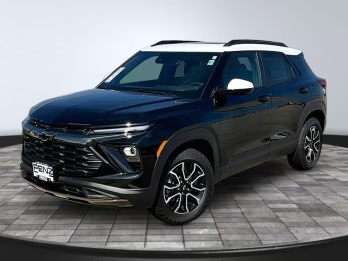


Unfortunately, we couldn't find any matching vehicles. We have plenty of other vehicles to choose from.
Dealer FAQs
Stopping by whenever you have some free time to shop is highly encouraged, and our doors are always open to our friends in Spring Valley. If your schedule is fit to burst with other upcoming events, an appointment is also a smart idea. Reserving some one-on-one time with one of our friendly experts guarantees that you get the most out of your valuable time spent perusing our copious inventory. You sure can, and it's amazingly simple and easy to use this complimentary tool on our website. While you're on the vehicle description page of the automobile that piques your interest, just click on the bell icon. After doing this, we'll let you know immediately the next time we lower this car, truck, or SUV's price so that you can take advantage of this great deal. It's a superbly convenient way to automatically save even more on your next vehicle purchase. Your valuable time is important to both you and our team, so we've streamlined the car buying and loan process significantly. All you need to bring with you to drive home in your dream vehicle are the following items and we will handle the rest: Yes. We would love to purchase your trade-in vehicle today. Our staff takes immense pride in providing the best prices possible on trade-in vehicles, so come see for yourself why so many other savvy shoppers turn to us first when the time comes to maximize the value of their old vehicle and upgrade into a brighter automotive future. Trading in your car at Chevrolet of Spring Valley is significantly easier and substantially more rewarding than selling it on your own if you're a car shopper who places a high priority on convenience, value, and time well spent. To maximize the return on your old car, all you have to do is connect with our team of knowledgeable and friendly used car specialists by calling (507) 330-8258 and we will get to work immediately on providing you with an outstanding estimate that delivers a truly impressive amount of value to you. After accepting your optimized and personalized trade-in quote, you can turn your attention right away to where the real fun begins: Shopping for the right high-quality and affordable used car, truck, or SUV to park in your front driveway.
Do I need an appointment to shop at Chevrolet of Spring Valley? Can I set up price drop alerts for vehicles that interest me? What do I need to bring with me when I come to Chevrolet of Spring Valley?
Does Chevrolet of Spring Valley accept trade-in vehicles? Should I trade my car in at Chevrolet of Spring Valley or sell it myself?
New vehicle pricing includes all offers and incentives. Tax, Title and Tags not included in vehicle prices shown and must be paid by the purchaser. While great effort is made to ensure the accuracy of the information on this site, errors do occur so please verify information with a customer service rep. This is easily done by calling us at (507) 330-8258 or by visiting us at the dealership.
**With approved credit. Terms may vary. Monthly payments are only estimates derived from the vehicle price with a 72 month term, 4.9% interest and 20% downpayment.
The Manufacturer’s Suggested Retail Price excludes tax, title, license, dealer fees and optional equipment. Dealer sets final price.
**With approved credit. Terms may vary. Monthly payments are only estimates derived from the vehicle price with a 72 month term, 4.9% interest and 20% downpayment.
The Manufacturer’s Suggested Retail Price excludes tax, title, license, dealer fees and optional equipment. Dealer sets final price.
Your Privacy Choices
Tracking is off because your browser sent the Global Privacy Control signal. You can allow tracking on this site below.